
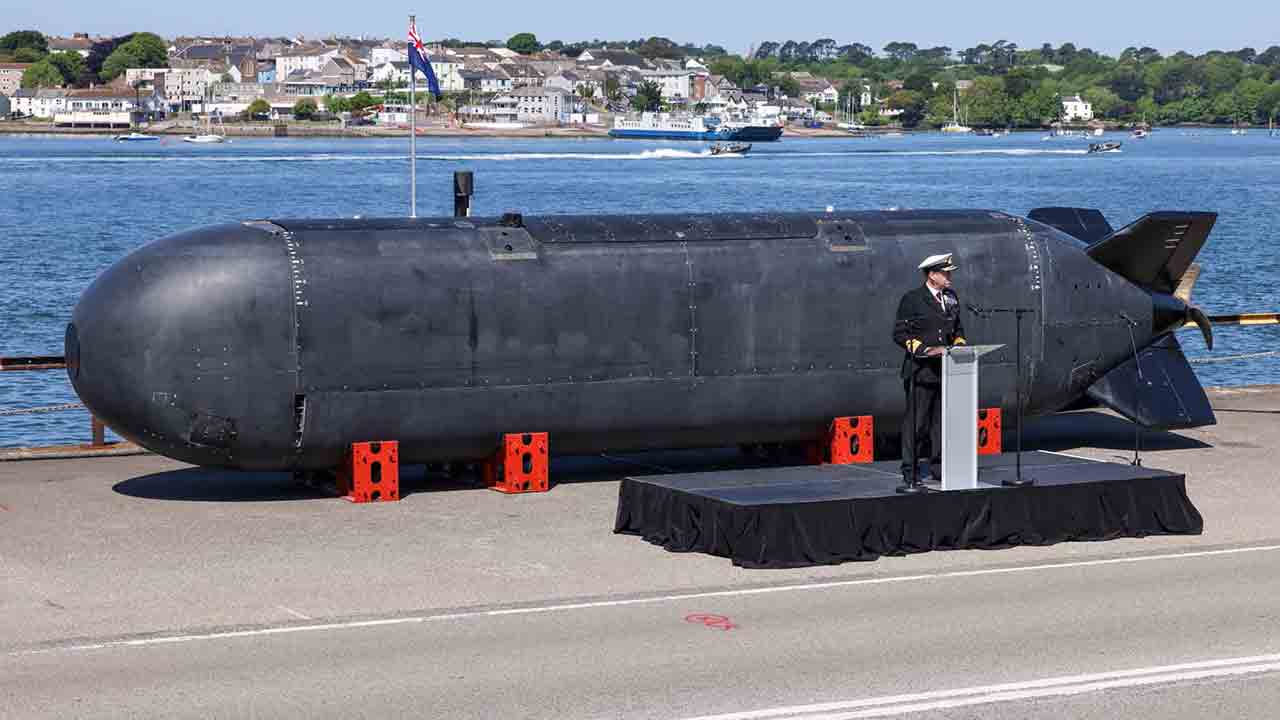
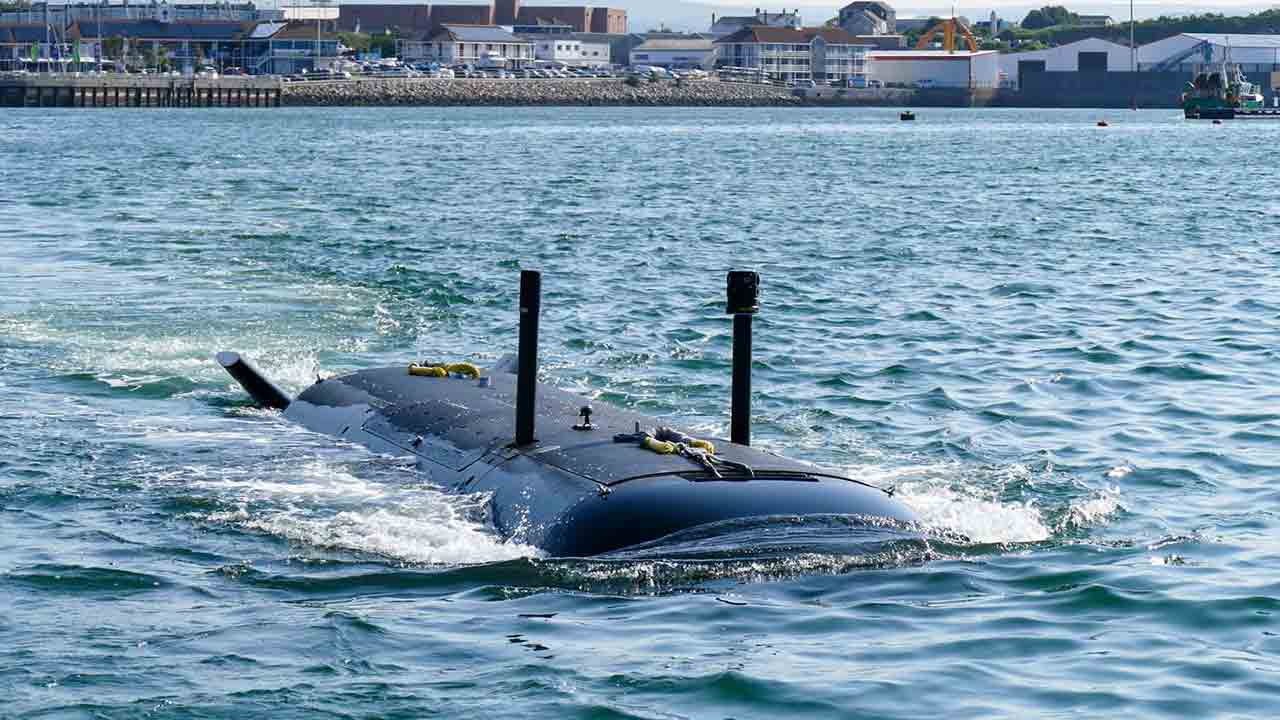
The UK government will expand its investment in the development of uncrewed submarines by signing an US$8.84 million contract to continue trials of CETUS, a large autonomous underwater vehicle developed by British company M Subs for the Royal Navy.
The program includes testing through May 2028 with the goal of advancing autonomous technologies and validating the platform’s military use across a range of operational scenarios.
Named XV Excalibur, the vehicle was officially unveiled in 2025 and is considered the largest uncrewed submarine ever tested by the Royal Navy. Measuring 12 meters in length and weighing 19 tonnes, it is assigned to the Fleet Experimentation Squadron, where it will be used to evaluate new intelligence, surveillance, reconnaissance, stealth, and payload integration technologies without taking part in military operations.
The Submarine Delivery Agency chose to award the contract directly to M Subs, arguing that the company is the only organization with the technical expertise required to operate CETUS safely during the testing phase. According to the agency, using another supplier would increase costs, delay the schedule, and raise program risks, as no other operator has complete mastery of the system.
The trials will also build on experience gained through Project Manta, previously developed by M Subs, and are expected to guide the future integration of large autonomous underwater vehicles into the Royal Navy. Following this initial phase, the UK government plans to launch new tenders for operating the system and developing payloads, expanding industry participation in advancing the project’s military capabilities.
XV Excalibur is the culmination of Project Cetus and is the Royal Navy’s first crewless submarine 🙌.
At 19 tonnes and 12 metres, Excalibur is roughly the length of a double decker bus. The SDA is proud to deliver this capability to the @RoyalNavy and be part of the project. pic.twitter.com/eF1VoTLrbK
— Defence Nuclear Enterprise (@DNE_mod) May 16, 2025
+ Ukrainian drones strike Russian space communications center
Source: UK Defence Journal | Photos: Royal Navy | This content was created with the assistance of AI and reviewed by the editorial team.
